


2x Global Music® Awards Winner 2026
for Best Latin Jazz Album and Best Group
KEYS TO THE GROOVE 2.0 is not a casual collaboration—it is the natural convergence of long-standing artistic relationships. Battistini and Valentino’s original 'Keys to the Groove' project earned a Global Music® Award for Latin Jazz, establishing a shared musical language rooted in trust and intuition. This second iteration expands that dialogue by welcoming Vergara into the core creative process, widening the rhythmic and expressive palette while remaining anchored to the same artistic center.
Recorded largely without rehearsal, the album relies on instinct, experience, and deep listening. Improvisation functions not as display, but as conversation—each track unfolding as a lived moment rather than a constructed statement. Moving fluidly across Latin jazz, blues, funk, swing, and global rhythmic traditions, KEYS TO THE GROOVE 2.0 reflects three artists meeting at a moment of artistic clarity—bringing history, joy, and restraint into alignment, and allowing groove to emerge as a shared experience rather than a destination.
Keys to the Groove 2.0 is a refined, deeply collaborative Latin jazz trio project rooted in trust, groove, and musical conversation. Featuring multi-GRAMMY® and Latin GRAMMY®-winning pianist and composer Lannie Battistini, multi-Latin GRAMMY® and EMMY®-winning bassist and multi-instrumentalist Dr. José Valentino, and percussionist Johnny Vergara, the album blends Afro-diasporic rhythms, Brazilian and Caribbean influences, blues language, and contemporary jazz sensibility. The music emphasizes lyricism, restraint, and joy—inviting audiences into a shared experience that is rhythmically engaging, emotionally resonant, and ideally suited for both indoor and outdoor, community-centered festival settings.

THE LATIN JAZZ BAND
Music Conversing. Soul Listening. Rhythm speaking.
KEYS TO THE GROOVE 2.0 unites three artists whose individual careers reflect international distinction and whose collective chemistry is grounded in long-standing trust, shared musical values, and deep listening.
Pianist Lannie Battistini is a multi-GRAMMY®, Latin GRAMMY®, and multi-Global Music® Award–winning pianist, producer, Arranger, composer and recording engineer whose work bridges the rich tradition of Latin jazz with contemporary expression. As Founder and CEO of Hands In Motion Music School & Productions, Battistini has cultivated a distinctive musical voice shaped by his formal education at Berklee College of Music and defined by lyrical clarity, rhythmic depth, and spiritual attentiveness. His pianism favors invitation over exhibition, creating musical landscapes where groove emerges through deep listening, restraint, and intention rather than excess.
Bassist Dr. José Valentino is a multi-Latin GRAMMY®, EMMY®, and multi-Global Music® Award–winning composer, flutist, multi-instrumentalist, and producer whose artistry spans bass guitar, flute, and saxophone. Equally grounded in performance and scholarship, Valentino serves as a professor of Music Business and Entrepreneurship at the University of Florida, where he leads nationally recognized initiatives in creative enterprise. His musical approach treats composition and bass playing as narrative tools—shaping space, momentum, and dialogue within the ensemble.
Percussionist Johnny Vergara, a gifted Panamanian artist, is widely regarded as a first-call percussionist for Latin jazz and tropical music throughout the southeastern United States. His playing is defined by feel, clarity, and forward motion. Drawing from Afro-diasporic rhythmic traditions, Vergara contributes not as ornamentation, but as breath—providing propulsion while honoring balance, texture, and collective groove.
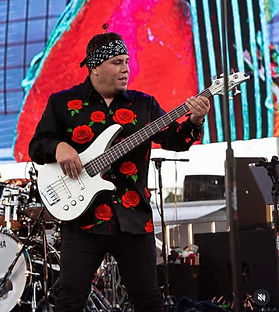
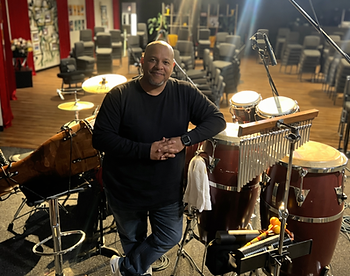

Track Reflections
The journey opens with “Ascension”, a clear statement of intent and lineage. Stylistically, it nods to the great traditions of Latin jazz—drawing from Cuban and Puerto Rican foundations through montunos, dominant chord motion, and rhythmic propulsion—while reimagining those elements through contemporary lenses. Funk-inflected grooves, hints of slap bass, blues vocabulary, and playful rhythmic turns give the piece a modern vitality. It feels both reminiscent and forward-looking, honoring tradition while refusing to remain static.
“Samba For You” feels like a sunlit drive toward Brazil—unhurried, melodic, and deeply lyrical. Lannie’s writing here emphasizes beauty and singable lines, allowing space to breathe and enjoy the ride. The groove is relaxed yet intentional, inviting listeners not to rush forward but to settle into motion itself, savoring melody, color, and balance.
With “Final Destination”, the trio leans into a sense of arrival without finality. The piece carries forward momentum while remaining open-ended, reinforcing the idea that destinations in music—and in life—are often transitional rather than fixed. There is confidence here, but also curiosity.
At the heart of the album sits “Fionna (A Tribute to My Late Daughter)", a moment of stillness and reflection. Unadorned and deeply personal to Lannie, it becomes the emotional center of the record. Rather than interrupting the flow, it clarifies it—reminding the listener that groove is not only movement, but meaning.
“Latino Blues” brings playfulness to the foreground. Blues-inflected and lightly cha-cha inspired, it feels familiar without feeling derivative. The trio leans into what they each love to play—blues language, Latin feel, funk sensibility—finding common ground across the musical Americas. The result is joyful, relaxed, and unmistakably communal. You can almost hear the laughter and musical teasing as the lines pass between them.
“On Green Dolphin Street” shifts the energy forward with momentum and purpose. Up-tempo and buoyant, it carries a sense of pursuit—never frantic, but always moving. The groove propels rather than overwhelms, creating forward motion that feels earned. It’s a reminder of the trio’s shared love for swing, clarity, and drive.
The album closes with “Sands of Zion", a piece colored by Middle Eastern tonalities and rhythmic sensibilities. Inspired by shared cultural curiosity and a love for global cuisine, sound, and history, the track weaves bass lines that echo plucked string traditions, while percussion draws on textures reminiscent of instruments like the darbuka. The result is contemplative and expansive—less a statement than a meditation—offering a sense of resolution without finality.
Taken together, these pieces reflect a trio deeply rooted in the music of the Afro-diaspora—Latin jazz, blues, funk, and global rhythmic traditions—yet unburdened by category. What unites the album is not genre, but relationship. Listening closely, one can imagine the trio smiling, listening, responding, and enjoying the moment together.
KEYS TO THE GROOVE 2.0 ultimately invites the listener into that shared space: where history meets play, tradition meets trust, and groove becomes a lived experience rather than a destination.


